
NO EXPERIENCE REQUIRED
Small trains.
Simple explanations.
New to model railways? Whether you use traditional DC or digital DCC, you’re in the right place. Pick a question, learn one thing, then try the next step.
Start with DC and DCC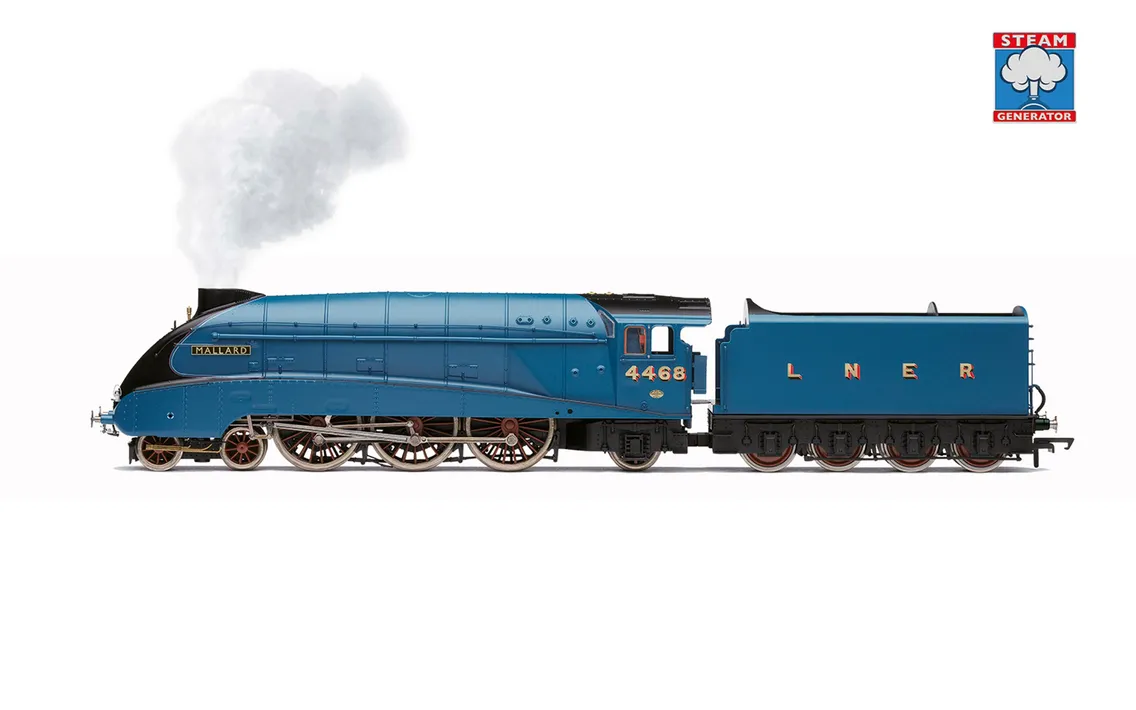 HORNBY CLASS A4 · MALLARD 4468EVERYONE STARTS SOMEWHERE.Product image: Hornby · R30551SS
CHOOSE YOUR STARTING POINT
How do you run your railway?
What would you like to understand?
DC and DCC, with no prior knowledge needed.
DC or DCC? Start here.
What’s the difference, and do I need to change?
Read the guideYour first DC railway
What do I need to make one locomotive move?
Read the guideChoosing a DC controller
What should I look for without getting lost in specifications?
Read the guideDC sections, sidings and parked locos
How can I stop every locomotive moving together?
Read the guidePoints and frogs on a DC layout
Why does a locomotive stop or short at a point?
Read the guideClean track, wheels and pickups
What should I clean when running becomes hesitant?
Read the guideMy DC locomotive will not run
What can I check before arranging a repair?
Read the guideTesting an older or unknown locomotive
How do I check a model when I do not know its history?
Read the guideMoving from DC to DCC
Do I have to convert everything at once?
Read the guideYour first DCC locomotive
What do I need to get one model running?
Read the guideAddresses and CVs, without the jargon
How does the controller know which loco I mean?
Read the guideTrack power, bus wires and droppers
What are all these wires actually for?
Read the guideMy loco won’t run. Where do I start?
What can I check before booking a repair?
Read the guideWhich decoder connection?
6-pin, 8-pin, Next18, 21MTC and PluX explained.
Compare connectionsJARGON, TRANSLATED
“What does that word mean?”
- DC / analogue
- A system where the controller varies the electricity in the rails to change a locomotive’s speed and direction.
- Controller
- The equipment used to regulate track power and control a train. Use one intended for the railway and its specified power supply.
- Powered section
- A length of track whose electrical supply can be controlled separately.
- Insulated rail joiner
- A non-conductive joiner used to stop electricity passing between adjoining rails or sections.
- Power-routing point
- A point designed to feed the selected route and isolate an unselected route; behaviour depends on the exact product.
- DCC Ready
- A DC locomotive designed with provision for a decoder, usually a socket. A decoder is not necessarily fitted.
- Address
- The number you select to control a particular decoder.
- Decoder
- The electronics inside a model that receive digital commands and control its motor or functions.
- Command station
- The part of a DCC system that creates the commands sent to decoders.
- CV
- Configuration Variable: a numbered setting stored in a decoder.
- Function
- An action selected on the controller, such as lights or a horn, when supported by the model.
- Blanking plug
- A removable connector that allows a socket-equipped model to operate on DC without a decoder.
- Programming track
- A separate track connection used by some systems to read or change decoder settings.
- Bus
- The main pair of wires carrying track power around a layout.
- Dropper
- A wire connecting a rail to the track-power bus; also called a feeder.
- Fishplate
- A rail joiner connecting adjacent rail ends.
- Frog
- The crossing area in a point where rails meet.
- Pickup
- The contacts that collect electricity from the wheels or rails.
- Short circuit
- An unintended connection between electrical paths, such as an object bridging both rails.
READY FOR A LITTLE MORE?
Manuals, demonstrations and useful places to go.
Find manufacturer support pages and YouTube channels in one small directory.
A PRACTICAL STARTING POINT
One question. One explanation. One next step.
The guides explain the basics without assuming you already know the terms. Exact fitting, programming and wiring procedures still come from your model and controller manuals.